Practice point

Teen dating violence among adolescents
Posted: Nov 5, 2026
Principal author(s)
Allison Rodrigues MD, Deinera Exner-Cortens PhD MPH, Ruchi Vijh MSc MPH, Amy Robinson MD, Alene Toulany MD, Ashley Vandermorris MSc MD, Megan Harrison MD; Canadian Paediatric Society, Adolescent Health Committee
Abstract
Teen dating violence (TDV) poses a significant threat to the health of Canadian adolescents. TDV includes any form of physical, sexual, psychological, technology-facilitated, or stalking aggression that occurs in dating, sexual, and/or romantic relationships prior to age 18. TDV is common and is experienced by one-third of youth in Canada, though prevalence is higher for socially marginalized groups. Experiencing TDV is associated with both immediate and long-term adverse health outcomes and is therefore a relevant issue for adolescent healthcare providers (HCPs). This practice point assists HCPs with defining and assessing types of TDV, evaluating clinically relevant risk and protective factors, and highlighting resources to share with youth. To guide discussions around TDV and healthy relationships during routine and incidental visits, HCPs can use the CUES approach (Confidentiality, Universal Education, and Support). HCPs should develop a structured approach for TDV disclosures before engaging in CUES.
Keywords: Adolescents; Dating violence; Intimate partner violence; Teens
Background
Healthcare providers (HCPs) play an important role in promoting healthy relationships and addressing teen dating violence (TDV). Approximately one-third of Canadian youth experience TDV (Figure 1)[1]. TDV is associated with immediate and long-term adverse health consequences[2][3]. TDV can affect youth of any sexual or gender identity and occur in relationships of any duration.
Figure 1. Prevalence of teen dating violence (TDV) victimization in the previous 12 months among a nationally representative sample of Grades 9 and 10 Canadian students (N = 3064), 2021/22
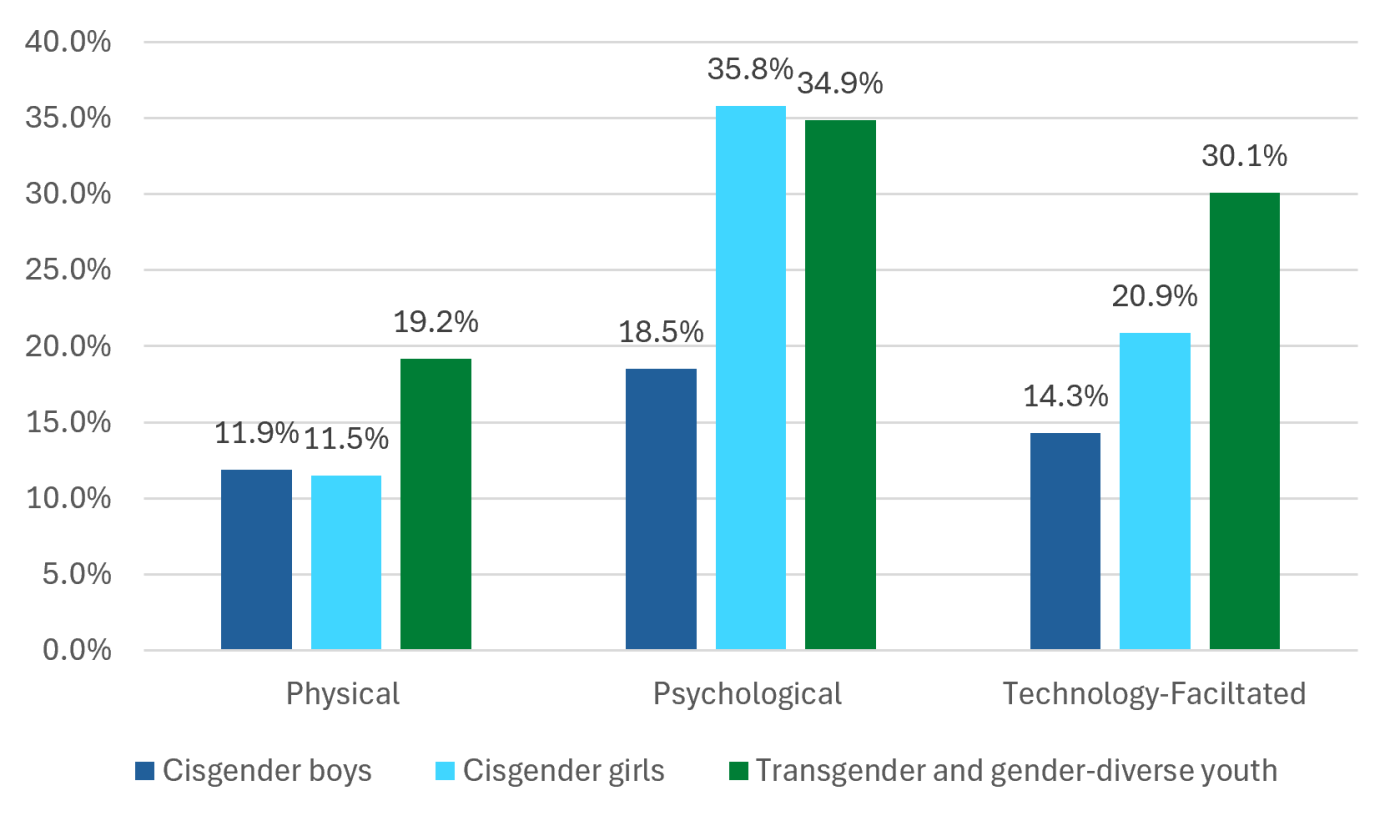
Data source: Canadian Health Behaviour in School-Aged Children (HBSC) Study[1].
Definitions
Healthy teen dating, romantic, and sexual relationships are safe, supportive, and violence-free (Table 1).
Table 1. Some common characteristics of healthy youth relationships | |
Characteristic | Examples |
Agency | Ability to leave the relationship safely. Boundaries and choice |
Closeness | Balanced with other relationships |
Communication | Active listening. Communicating feelings and needs |
Conflict resolution | Compromise. Managing jealousy and anger. Problem-solving |
Equality | Shared decision-making |
Positive interactions | Encouraging. Humour. Play. Support |
Respect | Respect for self and others |
Sexual health | Can refuse unwanted sexual activity. Access to contraception |
Adapted with permission from reference[4]
Unhealthy relationships lack many of the characteristics in Table 1, but do not include violent or abusive behaviours.
TDV includes different types of violent or abusive behaviours experienced in a dating, sexual, or romantic relationships that include at least one young person under age 18[5] (Figure 2). TDV can start when youth start dating (~Grade 6/age 11), and can be experienced in-person or via technology, or both simultaneously[6].
Figure 2. Types of teen dating violence (TDV) behaviours
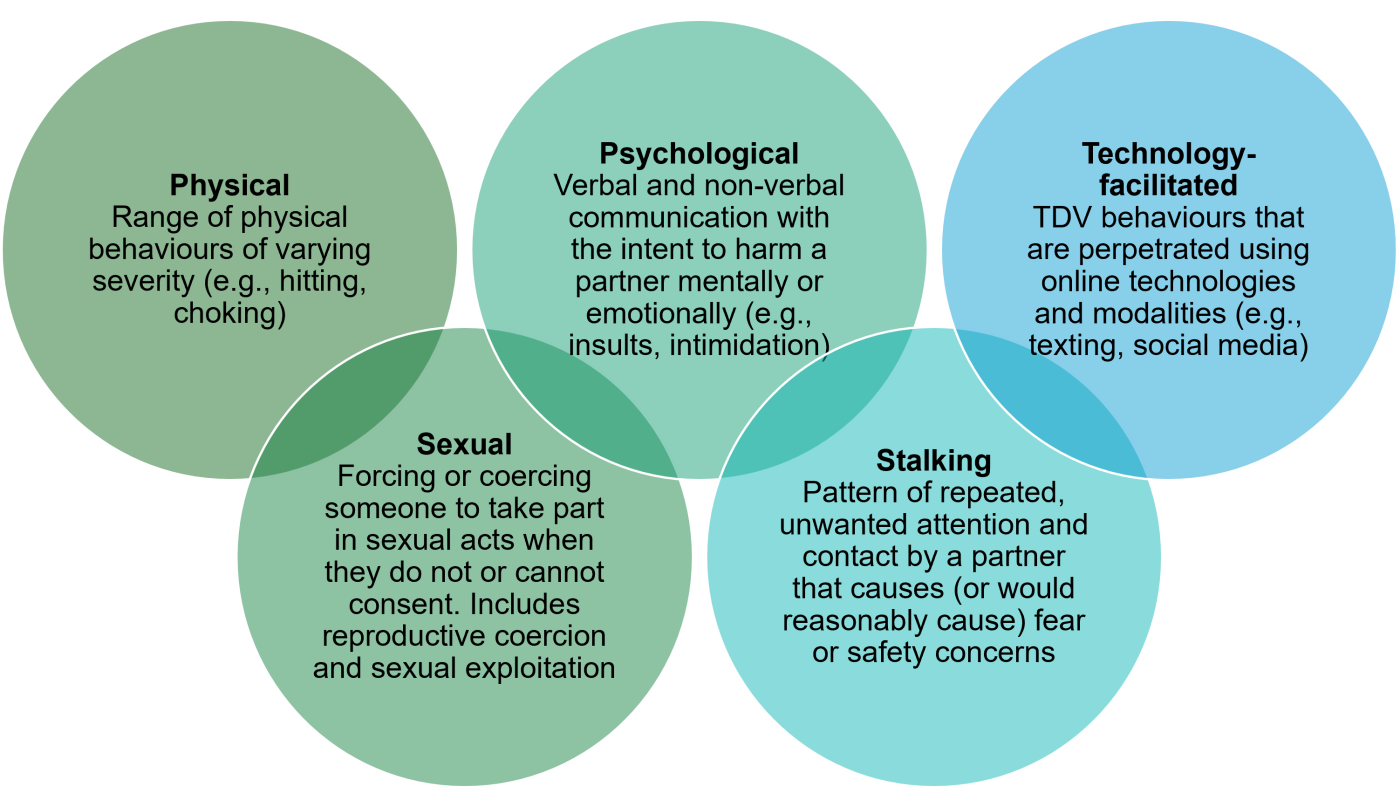
Information drawn from reference [7]
TDV has different patterns: youth can experience violence, use violence, or both (i.e., bidirectional TDV). Although bidirectional TDV is common[8], it does not imply that two partners have the same level of power or that violence is used for the same reasons by both partners (e.g., one partner may use violence for self-defense[9]).
Risk and protective factors
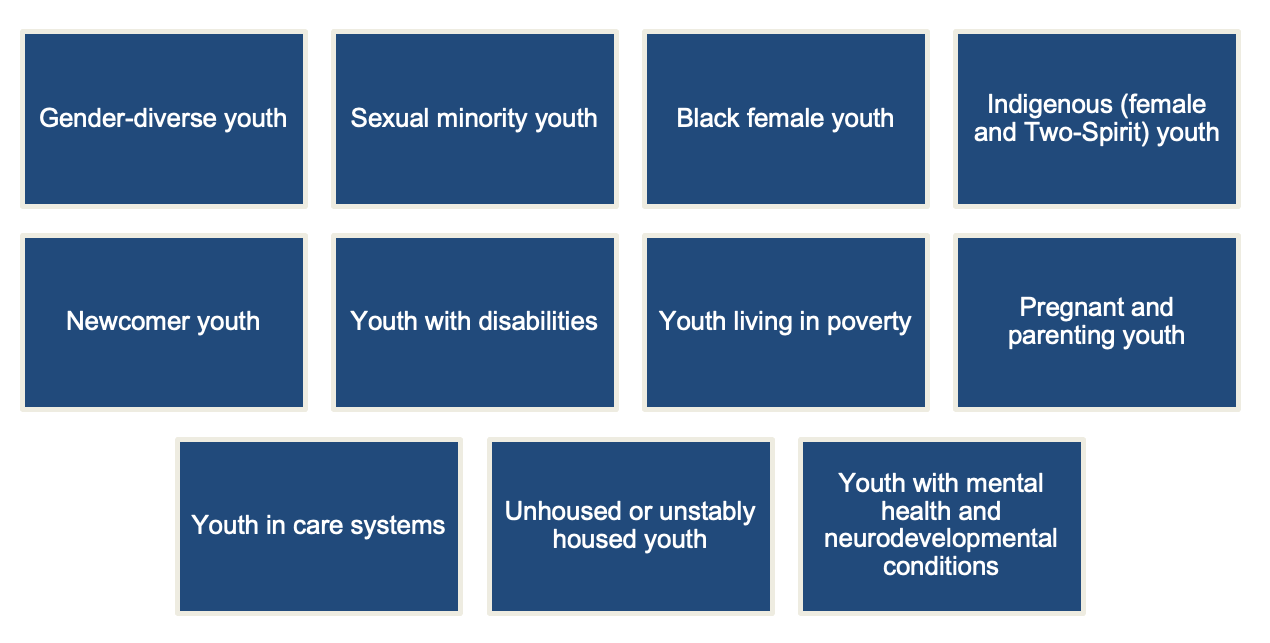
Youth from socially marginalized groups experience higher rates of TDV (Figure 3). This disproportionality reflects broader systems of oppression (e.g., racism) and discrimination at individual, relationship, community, and societal levels. To provide equitable care, HCPs need to understand the role of these structural factors and actively work to avoid perpetuating harm or stigma within healthcare settings.
Figure 3. Examples of youth at elevated teen dating violence (TDV) risk due to social and structural marginalization
There are a number of risk factors for TDV victimization and perpetration[10]. Among the most common risk factors are other experiences of violence, including:
- child maltreatment
- witnessing intimate partner violence at home
- peer group aggression (e.g., bullying, sexual harassment)
- past use or experience of TDV
For perpetration, other risk factors include internalizing (e.g., depressive symptoms) and externalizing (e.g., substance use) behaviours.
There are also important protective factors for both TDV victimization and perpetration, including:
- parental monitoring and support
- positive parent-child relationships
- prosocial peer groups
- school attachment
The paediatric provider’s role
HCPs should initiate conversations about healthy relationships during routine and incidental adolescent visits[11]-[14]. Normalizing these discussions at every visit helps build rapport and provides opportunities to share knowledge with youth and caregivers.
The goal of these conversations is not to elicit disclosures of TDV but to connect youth with supportive resources and create a safe environment in which youth can talk about violence, immediately or later on[13]. Providers can also make TDV-related information visible in clinic spaces (e.g., bathrooms), which can increase access to resources and reduce stigma around discussing TDV (see Resources, below). Resources should be gender-neutral and inclusive of youth of all sexual and gender identities.
Recommendations for practice
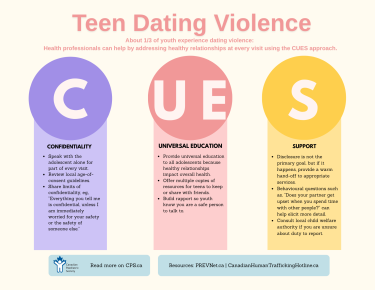
HCPs can use the CUES approach to discuss TDV and healthy relationships with their patients: discussing limits to Confidentiality, providing Universal Education, and, if TDV is disclosed, providing Support via a warm hand-off to appropriate services (Table 2[13]). CUES prompts can be integrated into existing social history assessments, such as the SSHADESS/HEADSS[15], and are typically brief to implement[16]. The CUES approach can also be used in telehealth settings. However, when TDV is disclosed, providers should arrange timely, in-person follow-up[13][17].
When sharing digital resources (including QR codes) with youth, HCPs should first discuss potential safety concerns related to digital privacy because partners may monitor online activity. When digital privacy is in question, ask whether printed materials may be a safer alternative.
Table 2. Example CUES script | |
Confidentiality |
“A lot of the patients I see are starting to be interested in dating and sex. I am hoping to chat with you about these things. I want to let you know that everything you tell me is confidential, unless I am immediately worried for your safety or the safety of someone else. Are you okay if we keep talking?” |
Universal Education |
“A lot of dating relationships are great experiences. But some patients have shared that they have experienced situations in their relationships that made them feel uncomfortable or even scared. We now talk to all our patients about their relationships because they can impact health. We also provide education on this topic because it is likely you or someone you know could use it. We want you to know this is a safe place for young people to share the issues that concern them”. [Share patient education resources] |
Support |
“Thank you for trusting me. Relationships can be complicated, and I’m sorry this is happening. What you are telling me is not okay and makes me concerned about your safety and health. I’d like to connect you to [name]/[website], who can let you know about some of the resources other teens have found helpful”. Tip: If you need to ask for more details, use behavioural questions so the question is clear (e.g., asking “Does your partner get upset when you spend time with other people?” instead of questions like “Are you experiencing abuse in your relationship?”[18]). |
Suspected and disclosed TDV
A structured approach for responding to TDV disclosures should be developed before implementing CUES[12][13][20]. The approach includes understanding what resources are (and are not) available in your area, such as local violence prevention and mental health services to facilitate a warm hand-off, and relevant online resources. Documentation following disclosure should focus on observed behaviours and youth-reported experiences rather than labelling (e.g., “victim”, “perpetrator”), to avoid stigmatization and potential bias in future care. As with all sensitive discussions, HCPs should maintain a nonjudgmental and open stance and limit follow-up questions to those directly relevant to the youth’s care.
Because TDV often overlaps with other common adolescent health concerns (e.g., substance use), it should be considered as part of the differential diagnosis when evaluating related presentations, such as unexplained somatic symptoms or frequent requests for STI or pregnancy testing[12][21]. In these situations, HCPs can offer harm reduction strategies through brief counselling and share information about relevant community resources. Discussions about harm reduction should be collaborative, trauma- and violence-informed, and youth-centred, recognizing that youth generally understand the dynamics within their own relationships best. For more information, visit CPS’s statement on harm reduction.
Summary
TDV is a prevalent problem with both immediate and long-term adverse health consequences. HCPs should use the CUES approach as part of their social history-taking to discuss TDV and healthy relationships with all young patients. Providers should develop a structured approach to TDV disclosures before using CUES, while being aware of supportive local or online resources for youth.
Resources on healthy youth relationships
Up-to-date Canadian resources (French and English) for adolescent HCPs, including two patient education resources that can be downloaded and shared directly with youth at no cost, are available from PREVNet.
Acknowledgements
This practice point was reviewed by the Child and Youth Maltreatment Section Executive and the Community Paediatrics and Mental Health and Developmental Disabilities Committees of the Canadian Paediatric Society.
CANADIAN PAEDIATRIC SOCIETY ADOLESCENT HEALTH COMMITTEE (2025-2026)
Members: Megan Harrison MD (Chair), Ayaz Ramji MD (Board Representative), Ellie Vyver MD (Past Chair), Alene Toulany MD, Ashley Vandermorris MD MSc, Amy Robinson MD, Chris Kobylka-Pang MD (Resident Member)
Liaison: Allison Rodrigues MD (CPS Adolescent Health Section)
Principal authors: Allison Rodrigues MD, Deinera Exner-Cortens PhD MPH, Ruchi Vijh MSc MPH, Amy Robinson MD, Alene Toulany MD, Ashley Vandermorris MSc MD, Megan Harrison MD
Potential Conflict of Interest
Dr. Deinera Exner-Cortens reported receiving project grants or funding for clinical trials from: Public Health Agency of Canada (PHAC), CIHR, Government of Alberta, SSHRC, Silver Gummy Foundation, National Center for Education Research, and the Ontario Ministry of Education. Ms. Ruchi Vijh reported receiving a graduate scholarship from the Alberta Children’s Hospital Research Institute. No other disclosures were reported.
All authors have submitted the ICMJE Form for Disclosure of Potential Conflicts of Interest.
Funding
There is no funding to declare.
References
- Craig W, Farrell A, Lambe L, et al. Family, Peer, and Teacher Relationships as Protective Factors in Adolescent Dating Violence. Public Health Agency of Canada. April 30, 2025. https://www.queensu.ca/hbsc/sites/hbscwww/files/reports/HBSC-2022-Dating-Violence-20250416-EN.pdf (Accessed July 21, 2026).
- Campo-Tena L, Larmour SR, Pereda N, Eisner MP. Longitudinal associations between adolescent dating violence victimization and adverse outcomes: A systematic review. Trauma Violence Abuse 2024;25(2):1265-77. doi: 10.1177/15248380231174504
- Piolanti A, Waller F, Schmid IE, Foran HM. Long-term adverse outcomes associated with teen dating violence: A systematic review. Pediatrics 2023;151(6):e2022059654. doi: 10.1542/peds.2022-059654
- Cavaletto A, Reed LA, Lawler SM, Turner BG, Walhof JK, Messing JT. “Healthy relationships”: A scoping review of definitions, components, and measures of healthy dating relationships among teens and young adults. Trauma Violence Abuse 2026;27(3):757-74. doi: 10.1177/15248380251325202
- Exner-Cortens D, Sharma S, Craig W. Research on law and policy to prevent teen dating violence: Scoping review. Trauma Violence Abuse 2025;27(3):690-703. doi: 10.1177/15248380251320994
- Stonard KE. The prevalence and overlap of technology-assisted and offline adolescent dating violence. Curr Psychol 2021;40(3):1056–70. doi: 10.1007/s12144-018-0023-4
- Exner-Cortens D, Kalwani N, Crooks CV. Teen dating violence: Current research, gaps, and controversies. In: Renzetti CM, Bergen R, eds. Gendered Violence in Families: New Directions. Solana Beach, CA: Cognella; 2025.
- Exner-Cortens D, Baker E, Craig W. Canadian adolescents’ experiences of dating violence: Associations with social power imbalances. J Interpers Violence 2023;38(1-2):NP1762-1786. doi: 10.1177/08862605221092072
- Zweig JM, Yahner J, Dank M, Lachman P. Can Johnson’s typology of adult partner violence apply to teen dating violence? J Marriage Fam 2014;76(4):808-25. doi: 10.1111/jomf.12121
- Claussen C, Matejko E, Exner-Cortens D. Exploring risk and protective factors for adolescent dating violence across the social-ecological model: A systematic scoping review of reviews. Front Psychiatry 2022;13:933433. doi: 10.3389/fpsyt.2022.933433
- Miller E, Decker MR, Raj A, Reed E, Marable D, Silverman JG. Intimate partner violence and health-care seeking patterns among female users of urban adolescent clinics. Matern Child Health J 2010;14(6):910-7. doi: 10.1007/s10995-009-0520-z
- Miller E. Prevention of and interventions for dating and sexual violence in adolescence. Pediatr Clin North Am 2017;64(2):423-34. doi: 10.1016.j.pcl.2016.11.010
- Ragavan MI, Barral RL, Randell KA. Addressing adolescent relationship abuse in the context of reproductive health care. Semin Reprod Med 2022;40(1-02):146-54. doi: 10.1055/s-0041/1741519
- Sieving RE, McRee AL, Mehus C, et al. Sexual and reproductive health discussions during preventive visits. Pediatrics 2021;148(2):e2020049411. doi: 10.1542/peds.2020-049411
- Ginsburg KR. The SSHADESS Screen: A Strength-Based Psychosocial Assessment. In: Ginsberg KR, Kinsman SB, eds. Reaching Teens: Strength-based Communication Strategies to Build Resilence and Support Healthy Adolescent Development. Elk Grove Village, IL: American Academy of Pediatrics; 2014.
- Miller E, Goldstein S, McCauley HL, et al. A school health center intervention for abusive adolescent relationships: A cluster RCT. Pediatrics 2015;135(1):76-85. doi: 10.1542/peds.2014-2471
- Ragavan MI, Culyba AJ, Muhammad FL, Miller E. Supporting adolescents and young adults exposed to or experiencing violence during the COVID-19 pandemic. J Adolesc Health 2020;67(1):18-20. doi: 10.1016/j.jadohealth.2020.04.011
- Kulkarni SJ, Lewis CM, Rhodes DM. Clinical challenges in addressing intimate partner violence (IPV) with pregnant and parenting adolescents. J Family Violence 2011;26(8):565-74. doi: 10.1007/s10896-011-9393-1
- National Health Resource Center on Domestic Violence/IPV Health. CUES: An evidence-based intervention to address domestic and sexual violence in health settings. February 2025. https://ipvhealth.org/wp-content/uploads/2025/03/CUES-graphic-2.25.pdf (Accessed July 21, 2026).
- Finkelhor D. Screening for adverse childhood experiences (ACEs): Cautions and suggestions. Child Abuse Negl 2018;85:174-9. doi: 10.1016/j.chiabu.2017.07.016
- Cutter-Wilson E, Richmond T. Understanding teen dating violence: Practical screening and intervention strategies for pediatric and adolescent healthcare providers. Curr Opin Pediatr 2011;23(4):379-83. doi: 10.1087/MOP.0b013e32834875d5
Disclaimer: The recommendations in this position statement do not indicate an exclusive course of treatment or procedure to be followed. Variations, taking into account individual circumstances, may be appropriate. Internet addresses are current at time of publication.