
Q&A with PCH – Joan L. Robinson
Posted on August 24, 2026 by the Canadian Paediatric Society | Permalink
Topic(s): Paediatrics and Child Health
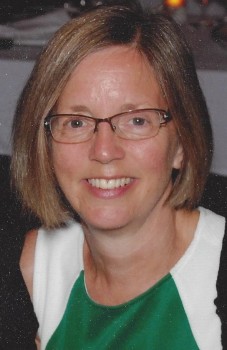
Q&A with PCH features conversations with journal editors, authors, and more. In our first session, we invited our editor-in-chief, Dr. Joan Robinson, to share her paediatric journey, her advice for early career paediatricians and more.
Dr. Joan Robinson is a paediatric infectious diseases specialist and professor and divisional director in the Department of Pediatrics at University of Alberta. She is editor-in-chief of Paediatrics & Child Health, the CPS journal. She attended medical school at U of A, and was a resident at British Columbia Children’s Hospital and U of A. A former chair of the CPS Infectious Diseases and Immunization Committee, Dr. Robinson’s work focuses on bacterial and viral diseases, vaccine hesitancy, and safe and effective use of antimicrobials.
Describe your journey from medical school to editor-in-chief of Paediatrics & Child Health?
I went into paediatrics because I found children way more entertaining than adults. I loved babysitting when I was an adolescent. And in medical school, the diseases that affected children were more straightforward and curable than adult diseases. Plus, I like the challenge of talking with parents. I think that's one reason why some people avoid paediatrics, but I found that to be a very good challenge. How did I end up as editor-in-chief, I guess because I've had a very eclectic research career. I've done research on all different aspects of paediatric infectious diseases. I got asked to peer review many manuscripts and got lots of editorial experience. I was briefly the co-editor in chief for an evidence-based child health journal, and during that time, I was asked to be the editor for the Evidence for Clinicians column in Paediatrics & Child Health. So, when (then editor-in-chief) Noni MacDonald stepped down, I thought I might have a chance. I applied and got that job more than 10 years ago.
What advice would you give to early career paediatricians that you wish someone had told you when you started out?
I mentioned my eclectic research career. I think if you want an academic career, you should choose a primary research focus, which I never really did, and try to become an expert in at least one area. It’s totally fine to do research on other topics, but I think it's good to have one area where people recognize you as an expert. And I wish I had done that.
What is the scope of Paediatrics & Child Health, and what advice would you give to authors interested in submitting their work to thejournal?
We aim to publish articles with practical implications for paediatricians, in both general paediatrics and in paediatric specialties that don't have an adult equivalent (for example, neonatology or developmental paediatrics). We aim to publish papers where people from those fields will look at that title and realize that it is something that they would like to read.
What are the most common reasons for rejection at the initial screening stage?
We sometimes reject manuscripts without sending them for peer review because they won’t interest our readers. A common example would be a paper that relates to a subspecialty, such as a topic that only a paediatric endocrinologist would really like to read about versus a general paediatrician. Also, we get lots of surveys and I think the problem with manuscripts that describe surveys is that commonly there are so many methodologic flaws. We also sometimes get descriptions of quality improvement (QI) projects. I think that a QI project is really only publishable if you collected a large amount of data that's not described elsewhere in the literature, or if you came up with a truly novel solution to a problem that people at other sites will have, and your solution would easily be transposable to another setting: Those are situations where it might be worth publishing a QI project paper. But I think usually people complete a project, present grand rounds, and someone says, you should publish that. The question always is – is it really of value to other people?
What is one paper that you would recommend from Paediatrics & Child Health last year?
There are many, many good papers published in PCH but the one that really stood out to me was Recognizing adverse drug events related to paediatric medication compounding.
Watch the Q&A session with Dr. Joan Robinson here.
Copyright
The Canadian Paediatric Society holds copyright on all information we publish on this blog. For complete details, read our Copyright Policy.
Disclaimer
The information on this blog should not be used as a substitute for medical care and advice. The views of blog writers do not necessarily represent the views of the Canadian Paediatric Society.
Last updated: Sep 14, 2026