
Creating conditions for others to feel safe, heard, and empowered: Lessons in trauma-informed care
Posted on February 13, 2026 by the Canadian Paediatric Society | Permalink
Topic(s): Paediatric practice, Advocacy, Mental health, Antiracism, Chronic and complex conditions
By Damilola Mabadeje, Student Researcher, Carwana Lab, University of British Columbia
Damilola Mabadeje was Lead Youth Researcher and a principal investigator for a joint project on trauma-informed care. In this article, she provides her perspective about working on the project as an undergraduate student. She discusses what she learned, and how the experience has affected her understanding of trauma-informed care and the importance of community consultation.
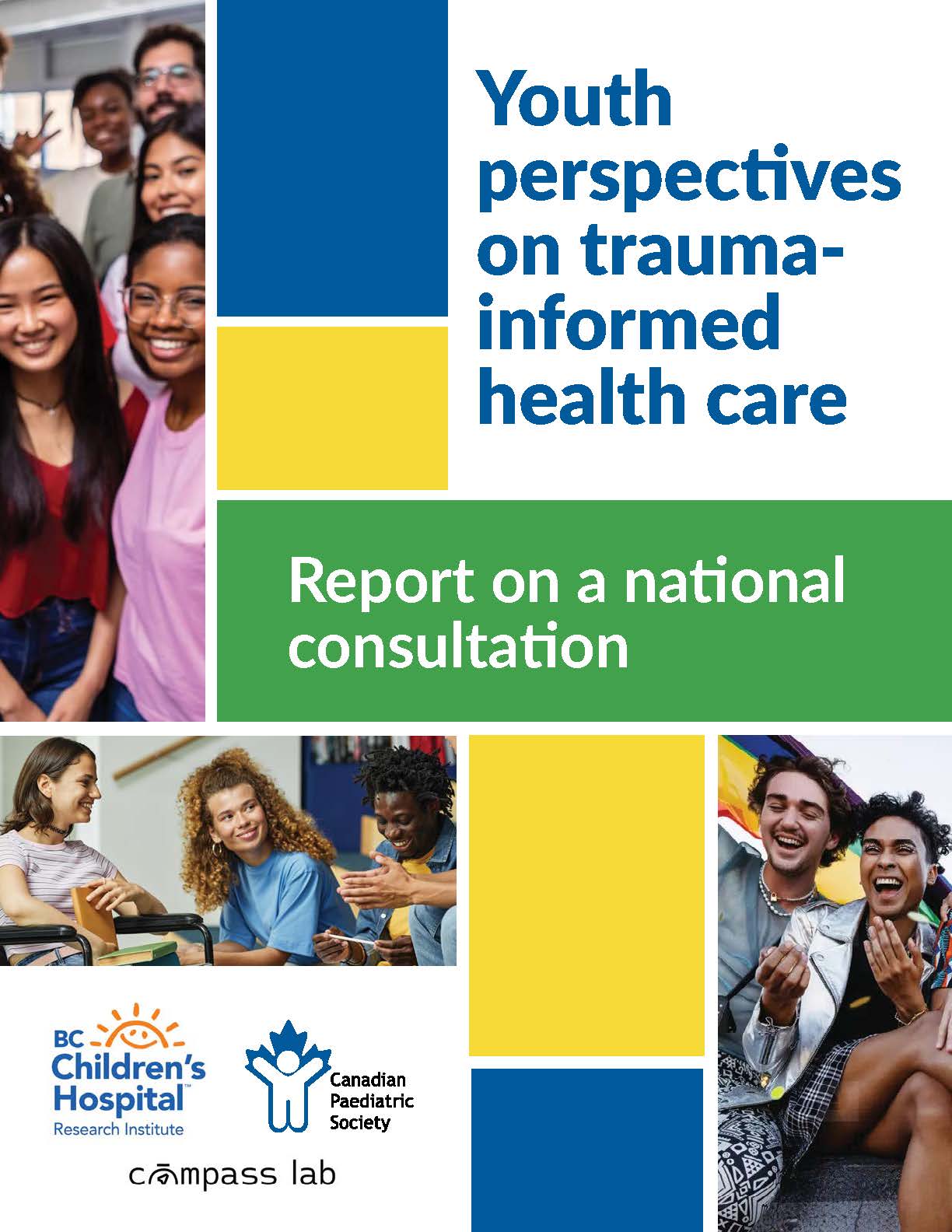
To learn more, read the report co-published with B.C. Children’s Hospital Research Institute and the Compass Lab (Unity Health Toronto).

When I first became involved in a trauma-informed care project, I expected to learn about policies, frameworks, and best practices. And I did. But what I didn’t expect was how deeply the experience would reshape the way I understand care itself, particularly the role of listening, humility, and partnership in interactions with young people.
As an undergraduate student working alongside youth, clinicians, and researchers, I was invited into an exciting process that was not about speaking for young people, but about creating space for them to speak for themselves. Our team grounded the project in the principle “Nothing About Us, Without Us”, which intentionally guided every stage of our work. Being a student researcher placed me at a unique intersection: I was learning about trauma-informed care academically while also co-designing and facilitating consultations rooted in the lived experiences of so many diverse youth. My role in developing the consultation guide, leading the Youth Advisory Council, and supporting national youth engagement sessions quickly became less about “collecting data” and more about learning how to ask questions—and listen—in ways that felt safe, respectful, and trauma-informed.
Working closely with the Youth Advisory Council meaningfully and fundamentally reshaped my understanding of leadership. I learned that leadership is less about authority and more about creating conditions for others to feel safe, heard, and empowered. Over time, I watched youth members become increasingly open and reflective. As youth guided discussions, informed key decisions, and shared their experiences with increasing confidence, it became clear that the YAC was driving this project from start to finish (the gradual appearance of cameras was just a bonus). I learned what youth-centred leadership looks like directly from the youth themselves.
During national engagement sessions, youth described care encounters that undermined safety and trust: explanations delivered too quickly to understand, coping strategies met with judgment, or watching decisions about their health unfold around them rather than with them when a parent was present. In contrast, they spoke about what made care feel safe: providers who introduced themselves, asked permission before discussing sensitive questions, and acknowledged that health care settings can feel overwhelming. What stood out to me most was how consistently youth from diverse regions and backgrounds articulated similar needs. None of these were abstract ideals; they were grounded in real and shared experiences of feeling rushed, unheard, or vulnerable in clinical settings. Hearing these patterns emerge across consultations reinforced that meaningful consultation is less about collecting individual stories and more about creating space for shared and collective truths to surface. Because youth were involved in shaping how questions were asked and discussions were facilitated, these themes surfaced organically rather than being heavily prompted.
As someone still early in my academic journey, this experience was deeply formative. In research and clinical practice, it can be tempting to equate competence with having the right answers. Working on this project taught me that community-centred engagement often begins with something much simpler: creating conditions where participants feel comfortable sharing their own “answers”.
Consultation, when done well, is not about extracting information but about building trust, redistributing power, and recognizing lived experience as a form of high expertise. Several participants told us they had never been asked how health care felt from their perspective. Others shared that they had been consulted before but never saw their feedback reflected in final materials or policies. Co-design is not a one-time feedback session, but should be an ongoing commitment to listening, adapting, and being accountable for turning what we hear into tangible change. Through co-design, engagement becomes relational rather than transactional. Youth experience this type of engagement not only through the questions we ask, but through how we show up: our tone, body language, and willingness to slow down. They are keenly aware of power dynamics and are often navigating multiple systems that have not always felt safe or responsive. Youth do not expect clinicians to be flawless; they want to be treated as collaborators in their own care. Most importantly, young people are experts in their own lives. When healthcare systems learn from them rather than about them, we move closer to care that is not only clinically effective, but genuinely safe and youth-centred.
Ultimately, this work reminded me that listening is not passive. It is an active, skilled, and ethical practice. When youth are given the space to be heard, they offer insights that can fundamentally improve how we care for them. I am deeply grateful to have witnessed what meaningful partnership can look like so early in my academic and professional journey.
Copyright
The Canadian Paediatric Society holds copyright on all information we publish on this blog. For complete details, read our Copyright Policy.
Disclaimer
The information on this blog should not be used as a substitute for medical care and advice. The views of blog writers do not necessarily represent the views of the Canadian Paediatric Society.
Last updated: Apr 13, 2026